Walter Rodney: A Revolutionary Intellectual
By Nadir A. Nasidi
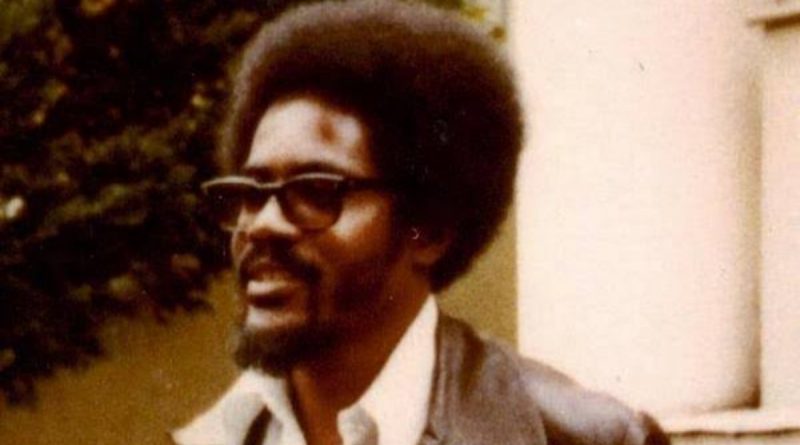
The unjust expulsion of Walter Rodney from Jamaica 51 years ago, paved the way for the famous Rodney Rebellion as a direct reaction to his banning, which could not be separated from the exploitation of African-Jamaican masses by the neo-colonial regime of that time.
Therefore, this piece of writing is my intellectual contribution for the commemoration of this great black revolutionary intellectual, social mobiliser, and pan-Africanist scholar who through words and actions castigated the forces of capitalism, racism, economic exploitation, and oppression not only in Guyana, his country, but Tanzania and Jamaica.

Born on the 23rd of March, 1942 in Georgetown, Guyana, Rodney was a by-product of Guyanese laboring classes. Percival Rodney, his father, was a tailor suffering under a capitalist firm in his attempt to cater for his family.
Being a member of a Marxist multiracial mass movement called Peoples’ Progressive Party (PPP), Percival was sending his little son, Walter to distribute PPP’s literature to various houses in the community as a way of enlightening them about the need for socio-economic reforms to exonerate the working class from the capitalist exploitation and oppression.
While a high school student at Queen’s College under the tutorship of Dr. Robert Moore, Walter developed a great interest in historical scholarship, which he thought to be a powerful weapon for the emancipation of the common man.
On an open scholarship in 1960, Walter got admitted into the University of West Indies (UWI), Mona Campus, where he graduated in 1963 with a first class degree honours in Modern History.
While a university student, Walter co-authored an article titled ‘The Negro Slave’ together with C. Augustus, which featured in the Caribbean Quarterly in 1964. Based on the content of the paper and his ideas, the Jamaican secret police reserved a file on Rodney and his activism who they regarded as a ‘radical leftist’.
ALSO READ: Dr. Bala Usman – A Revolutionary Intellectual
In 1963, Walter went to the School of Oriental and African Studies at the University of London for his PhD, which he completed in 1966 at the age of 24. His doctoral thesis was later published through the Oxford University Press as ‘A History of the Upper Guinea Coast, 1545-1800’.
This book as Dr. Ajamu Nangwaya argues ‘highlights the class interest of the African rulers that informed their participation in the Atlantic slave trade, the nature of political rule with the governed, and the negative impact of the alliance between African rulers and European capitalists-cum-slavers on the region’s development’.
In 1967, Walter was employed as a lecturer at the University of Dar es Salam, Tanzania. The following year, he switched to his alma mater as a lecturer of African history in the Department of History.
As opposed to his professors during his undergraduate studies who thought that ‘there is no such thing ‘a revolutionary intellectual’, Rodney stood firmly to defend what he believed in. They argued that ‘one can only be an intellectual or a revolutionary as the two cannot be combined’.
Walter proved to the world beyond an iota of doubt that the position of a revolutionary intellectual does exist, which is also an option for academics and students having at the back of their minds, a great quest for social transformation.
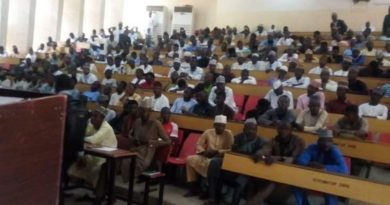
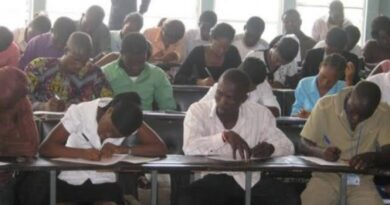
For that simple reason, Walter used the university as a flat form to disseminate oppositional ideas and scholarship, which in turn, radicalized students to fight injustice and oppression.
He also became a public preacher against the dangers of liberal capitalist democracy, which kept on fooling the masses that there was no alternative to capitalism as an economic system.
While in Jamaica, he mobilized the working class, being the majority there to stand for their rights and the realization of a socialist society. Through his activism, many students and faculty members of his university joined the struggle for justice and emancipation.
For this move, in 1968, Walter was labeled persona non grata by the Jamaican government. This decision made the Student Guild to protest vehemently the peak of which was the said ‘Rodney Rebellion’, which is sometimes referred to as ‘Rodney Riot, or Rodney Affair’.
Similarly, the Forbes Burnham’s regime forced the Academic Board of governors at the University of Guyana to reject Walter’s application for a job in October, 1968.
Despite the government’s repressive policies towards him, Walter stood very firmly to fight the major social diseases of his time; Racism, social domination and capitalist exploitation.
As Nelson Mandela once argued, the life of an activist is difficult for he has no permanent home, luxury and time to be close to his family, friends and close relatives.
Mahatma Gandhi, another fearless social mobilizer and a revolutionary while commenting on his condition argues that ‘separation from wife and children, the breaking up of a settled establishment, and the going from certain to uncertain-all this was for a moment painful, but I had inured myself to an uncertain life’.
Walter’s refusal forced him to go back to the University of Dar es Salam in 1969 as a senior lecturer. There, he wrote his authoritative book, or rather, his magnum opus titled ‘How Europe Underdeveloped Africa’.
Throughout the pages of this book, Walter proved the way and manner the African continent was being exploited mercilessly as goods and raw materials were extracted to feed factories and firms in Europe and Americas, which in turn, led to the underdevelopment of the African continent and the impoverishment of its people.
In it, he also argues that even the university education we receive is designed to support western mentality. I read this very book when I was in level two, at my alma mater, Bayero University, Kano.
Unfortunately, within the university community, the book was patronized more by the students of political science than that of history which was either a very high bar, or one big blow on the face of our department.
In 1974, Walter derived by the spirit of nationalism went back to his academic career and activism in Guyana. As it has been the life of an activist sometimes, Walter during that time did not have a stable source of income from the time of his return and his unjustifiable assassination on the 13th of June, 1980 when a bomb was planted in his car.
Before his death, he successfully used the famous Working Peoples’ Alliance to stage his struggle for social transformation.
He equally demonstrated beyond one’s imagination, that it is not impossible for intellectuals to join the systems of oppression and use their education as a powerful weapon to off-root exploitation and injustice.
He also believed that radical intellectuals should not under any circumstance confine their contribution to the academic environment, but must plunge into the society as liberators and social mobilizers against the forces of evil.
Nadir A. Nasidi is from the Department of History, Ahmadu Bello University, Zaria. Email: nanasidi@abu.edu.ng
For Advert Placement, Sponsorship, support, Article submission, suggestion, etc, Contact us info@theabusites.com, +2349015751816 (WhatsApp)